

 |
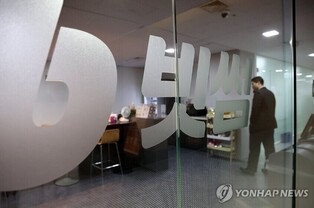
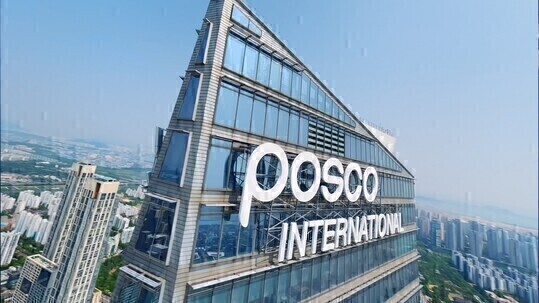
POSCO International headquarters in Songdo, Incheon. (Photo courtesy of POSCO International) |
[Alpha Biz= Kim Eun-mi] South Korea’s Supreme Court has ruled that POSCO must directly employ a majority of subcontracted workers, in a landmark decision on the legality of dispatch labor practices.
On February 16, the court upheld lower court rulings in favor of 215 out of 223 plaintiffs in two lawsuits filed by employees of partner companies seeking recognition as POSCO workers. The workers had been employed at POSCO’s steel plants in Pohang and Gwangyang since filing the lawsuits in 2017.
The court dismissed one plaintiff who had exceeded the retirement age and remanded seven cases involving cold-rolled product packaging workers, ruling that they were not sufficiently integrated into POSCO’s core business operations.
The central issue was whether a dispatch relationship existed between POSCO and the subcontracted workers. Under Korean law, companies must directly hire dispatched workers if they are employed for more than two years.
The court found that the workers were effectively integrated into POSCO’s production process and operated under its direction and supervision. It cited evidence including nearly identical work manuals between POSCO and subcontractors, the use of POSCO’s manufacturing execution system (MES) to assign tasks, and POSCO’s ownership of key production facilities.
As a result, eight workers who exceeded the two-year threshold prior to a 2006 legal amendment are deemed directly employed, while the remaining 207 workers must be directly hired by POSCO under current regulations.
However, the court ruled that seven workers from POSCO M-Tech engaged in packaging operations did not qualify as dispatched workers, citing the subcontractor’s operational independence and limited integration into POSCO’s business.
The ruling follows a series of lawsuits over alleged illegal dispatch practices dating back to 2011. Earlier cases filed in 2011 and 2016 were also decided in favor of workers by the Supreme Court in 2022, while additional cases involving 463 plaintiffs remain pending before the court.
Alphabiz 김은미 인턴기자(kfootle@alphabiz.co.kr)