

 |
Photo courtesy of Yonhap News |
[Alpha Biz= Kim Eun-mi] The South Korean government has formally urged the United States to refrain from imposing any trade sanctions or punitive measures against Korea under Section 301, arguing that such actions would be unjustified.
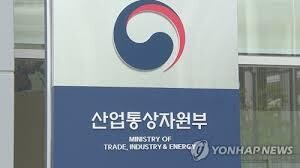
According to the Ministry of Trade, Industry and Energy on February 16, the government has submitted its official position to the Office of the United States Trade Representative (USTR), which recently launched an investigation into global overcapacity and forced labor practices.
Section 301 of the U.S. Trade Act allows the USTR to recommend broad retaliatory measures—including tariff increases, withdrawal of trade concessions, and import restrictions—if foreign practices are deemed unfair, unreasonable, or discriminatory.
In its submission, the Korean government emphasized that its manufacturing sector operates under market-based principles and that systems to prevent forced labor have been strengthened. It argued that any adverse measures resulting from the investigation would be neither appropriate nor necessary.
The government stressed that Korea’s industrial structure is fundamentally market-driven, with production levels and facility utilization rates fluctuating in line with economic cycles. “Manufacturing activities are led by private enterprises operating within the market, and export prices have consistently aligned with global market levels,” the ministry said, adding that this demonstrates Korea does not artificially suppress export prices through non-market mechanisms.
It also noted that production decisions are based on verified orders and commercial demand, rather than government directives aimed at sustaining output regardless of market conditions.
Furthermore, the government underscored that Korea has undergone restructuring in response to global oversupply, rather than contributing to structural overcapacity driven by non-market support—an issue of concern highlighted by the USTR.
While Section 301 investigations typically take more than six months, some observers expect a faster timeline in this case, as the probe follows a legal ruling against reciprocal tariffs previously imposed under the International Emergency Economic Powers Act (IEEPA), potentially prompting the U.S. to seek alternative trade measures.
알파경제 김은미 인턴기자(kfootle@alphabiz.co.kr)