

 |
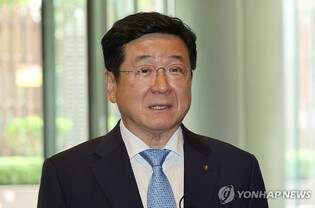
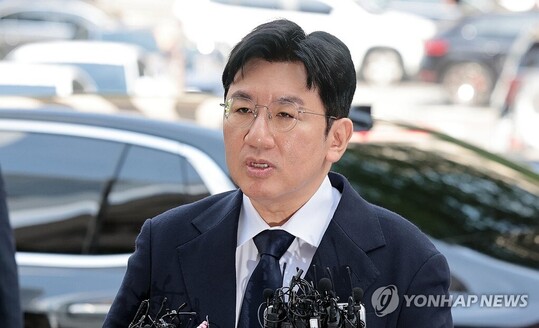
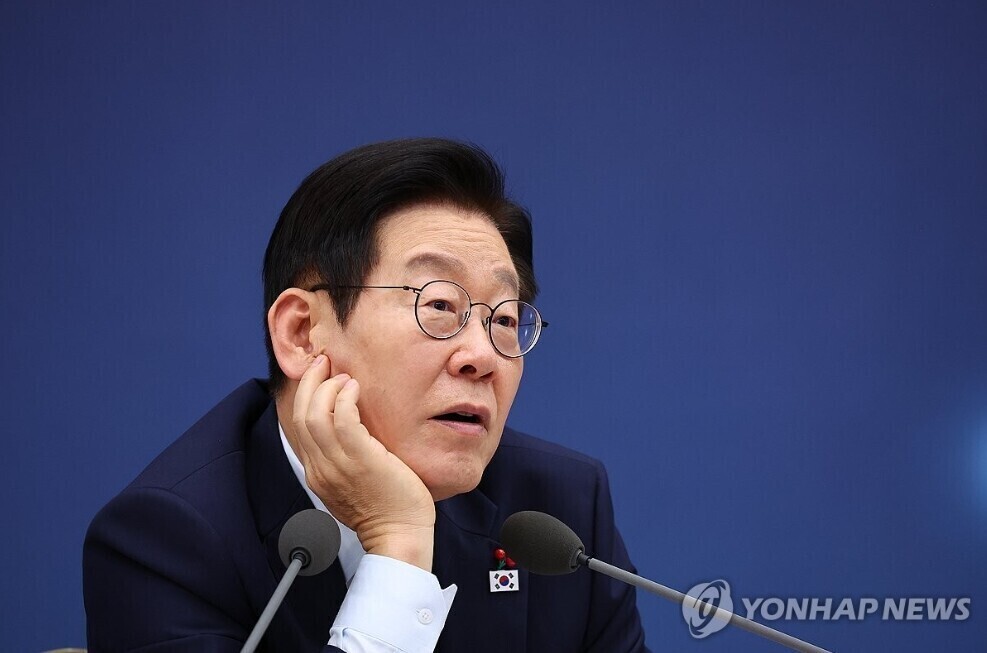
President Lee Jae-myung (Photo: Yonhap News) |
[Alpha Biz= Kim Jisun] SEOUL/BEIJING — Ahead of President Lee Jae-myung’s state visit to China scheduled for January 4–7, diplomatic tensions between China and Taiwan have reached a fever pitch. The visit follows a large-scale encirclement exercise by the Chinese military on December 29–30 and defiant New Year addresses from both Beijing and Taipei.
In his New Year message on January 1, Chinese President Xi Jinping emphasized that "compatriots on both sides of the Strait are blood brothers," adding that "the historic trend of national reunification is unstoppable." Conversely, Taiwanese President Lai Ching-te used his New Year address to announce a "special defense budget," vowing to "firmly defend national sovereignty" in the face of "China’s grave military ambitions."
Beijing’s Diplomatic Pressure on Seoul Against this volatile backdrop, China is intensifying pressure on South Korea to clarify its stance on Taiwan. During a phone call between foreign ministers on December 31, the Chinese side reportedly requested that Seoul explicitly state its "opposition to Taiwanese independence" during the upcoming summit.
South Korea’s Ministry of Foreign Affairs (MOFA) stated on January 1 that Foreign Minister Cho Hyun and Chinese Foreign Minister Wang Yi agreed to maintain close communication to ensure the success of the President’s visit. However, the Chinese readout of the same call placed a heavy emphasis on the "One China" principle—a detail notably absent from Seoul’s initial statement.
Minister Wang Yi pointed to the upcoming 80th anniversary of the victory over Japan in WWII, criticizing "certain Japanese political factions" for attempting to "whitewash colonial crimes." He urged South Korea to maintain a "correct position" and "strictly abide by" (恪守) the "One China" principle, as established during the 1992 normalization of diplomatic ties.
Strategic Implications Beijing’s rhetoric is seen as a move to drive a wedge between the ROK-U.S.-Japan trilateral cooperation. Following Japanese Prime Minister Sanae Takaichi’s suggestion last November that Japan might intervene in a Taiwan conflict, China-Japan relations have deteriorated sharply.
"China is sending a clear message to Seoul not to side with Taiwan as Japan has," said Professor Kang Jun-young of Hankuk University of Foreign Studies.
The upcoming summit will be a critical test for South Korea as it navigates the delicate balance between its security alliance with the U.S. and its strategic partnership with China amidst heightened regional instability.
알파경제 Kim Jisun Reporter(stockmk2020@alphabiz.co.kr)