

 |
Photo courtesy of Yonhap News |
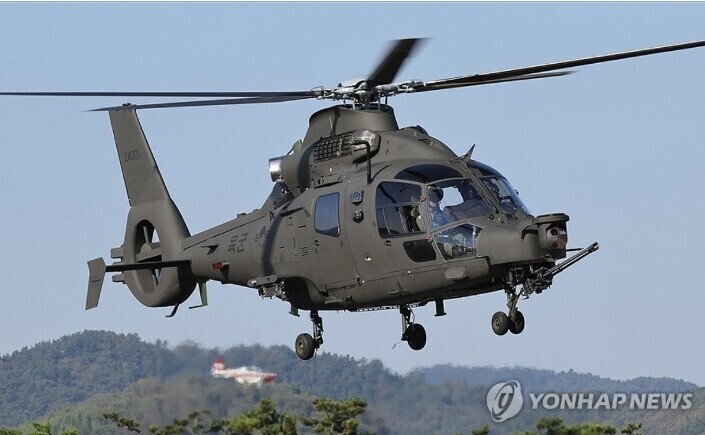
[Alpha Biz= Kim Joonhyun] Serious defects have been identified in South Korea’s next-generation Light Armed Helicopter (LAH), known as Mireon, raising significant concerns over safety and quality control in the country’s defense procurement system.
According to data compiled by a lawmaker from the National Assembly Defense Committee and the Defense Acquisition Program Administration, the scale of the issue is substantial. Of the 57 engines delivered to the military by Hanwha Aerospace, 47 units (82.4%) showed severe corrosion, while 38 units (66.6%) exhibited critical structural cracks.
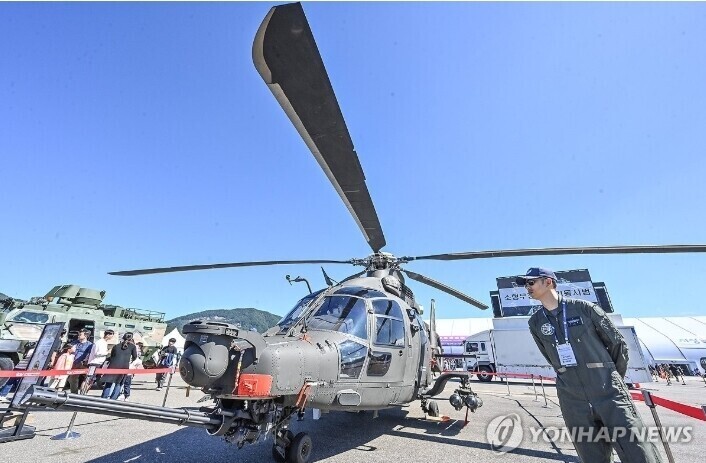 |
Photo courtesy of Yonhap News |
The defects are believed to be linked to the diffuser, a key engine component based on original technology from Safran and assembled domestically. Industry observers have raised concerns that prescribed manufacturing and assembly processes may not have been fully followed.
Oversight procedures have also come under scrutiny. The Defense Acquisition Program Administration reportedly approved the components despite high defect rates. As a result, 15 helicopters equipped with these engines had already been deployed to an Army aviation training unit and used in pilot training.
 |
Photo courtesy of Yonhap News |
Although early signs of abnormalities were detected in April, flight operations were not suspended until May, prompting questions about the timeliness of safety measures.
Experts suggest that the issue may point to broader systemic challenges within the defense procurement and quality assurance framework. They emphasize that strict adherence to manufacturing standards and rigorous inspection processes are critical, particularly for aviation systems where component failure could have severe consequences.
 |
Photo courtesy of Yonhap News |
The incident is expected to affect the Army’s modernization plan, which aims to replace aging platforms such as the MD 500 Defender and AH-1S Cobra with approximately 160 LAH units by 2031. Training schedules have already been impacted, raising concerns about operational readiness.
Calls are growing for a comprehensive review of the procurement and inspection process. Experts stress the need for a thorough investigation to determine accountability and to strengthen safeguards against similar issues in the future.
Alphabiz 이준현 기자(wtcloud83@alphabiz.co.kr)