

 |
Photo courtesy of Yonhap News |
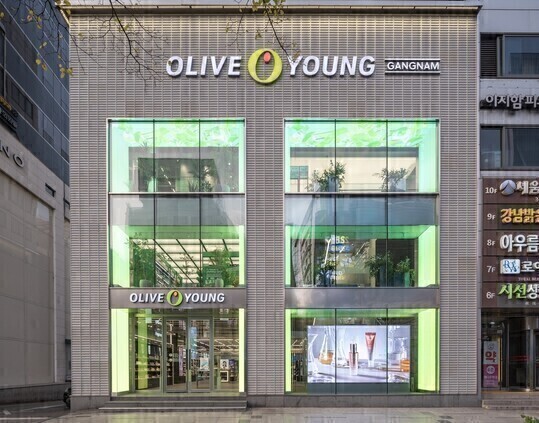
[Alpha Biz= Kim Jisun] Kakao Mobility has been selected as the preferred bidder for CJ Olive Young’s digital signage business, marking a significant step in the company’s push to create new revenue streams by combining mobility data analytics with business-to-business (B2B) services.
According to an exclusive report by the Seoul Economic Daily on Monday, Kakao Mobility emerged as the preferred bidder in CJ Olive Young’s tender for a content management system (CMS) and media operations rights. SK Broadband and KT were among the companies that also participated in the bidding, according to industry sources.
Once a final contract is signed next month, Kakao Mobility will secure the operating rights for digital signage installed at more than 1,300 CJ Olive Young stores nationwide. Digital signage refers to media platforms that deliver information and advertising through displays, including outdoor LED billboards and in-store information screens.
Kakao Mobility entered the digital-out-of-home (DOOH) advertising market in 2022 and has since expanded its footprint by operating around 40,000 media assets, including rear-seat entertainment (RSE) screens in taxis and large-scale digital billboards at Seoul Station. The company’s competitive edge lies in its mobility data analytics capabilities, built over more than a decade through its taxi-hailing service Kakao T.
By analyzing users’ movement routes and behavioral patterns, Kakao Mobility is able to deliver highly targeted, location-based advertising at optimal touchpoints—an advantage widely seen as a key factor behind its successful bid.
The move is viewed as part of Kakao Mobility’s broader strategy to diversify its business by leveraging proprietary data and IT capabilities across advertising and other adjacent sectors. According to market research firm Market Research World, the global digital signage market is projected to grow from USD 17.89 billion (approximately KRW 26 trillion) last year to USD 32.41 billion (approximately KRW 47 trillion) by 2034.
Alphabiz Reporter Kim Jisun(stockmk2020@alphabiz.co.kr)