

 |
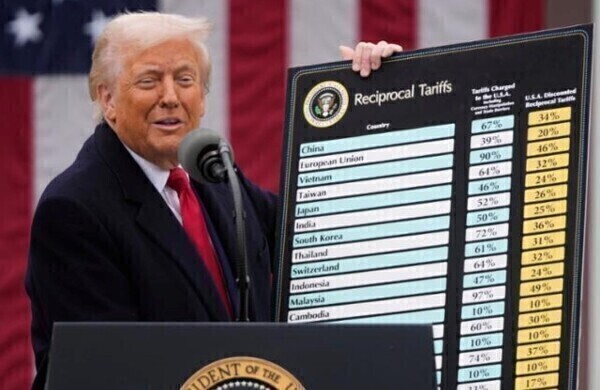
U.S. President Donald Trump announces reciprocal tariffs. (Photo=Yonhap News) |
[Alpha Biz= Kim Jisun] Seoul, September 28, 2025 – The business sentiment of Korean manufacturers has weakened sharply as the impact of U.S. high-tariff policies takes hold, according to a survey released by the Korea Chamber of Commerce and Industry (KCCI).
KCCI reported that the Business Survey Index (BSI) for the fourth quarter stood at 74, down 7 points from the previous quarter and 11 points from a year earlier. The index has remained below the benchmark level of 100 for 17 consecutive quarters since Q4 2021. A reading below 100 indicates that more companies view business conditions as worsening rather than improving.
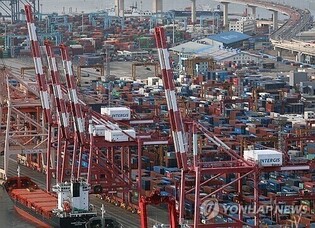
Export-oriented firms recorded a steeper decline (-13 points) than domestic-oriented firms (-5 points), reflecting the heavier burden from newly imposed or anticipated high tariffs on industries such as automobiles, steel, and pharmaceuticals.
Automobiles: Down 16 points to 60, as tariffs applied since September are now higher than those levied on Japan and the EU.
Steel (63) and petrochemicals (63): Hurt by 50% tariffs on exports to the U.S. and global oversupply from China and the Middle East.
Non-metallic minerals (56): Dragged down by sluggish construction demand.
Cosmetics and biotech/pharmaceuticals: Both fell below 100 after exceeding the benchmark in Q2.
Some resilience was seen in semiconductors (98), supported by demand from artificial intelligence, and food (98), buoyed by seasonal holiday consumption and strong K-food exports.
Regionally, all areas remained below the 100 benchmark. Tariff-sensitive hubs such as Daegu (60), Gyeongbuk (68), and Busan (66) showed sharp declines due to their concentration in auto parts, textiles, steel, and machinery. Major petrochemical regions including Jeonnam (60), Chungnam (71), and Ulsan (74) also weakened further on falling global demand and profitability pressures.
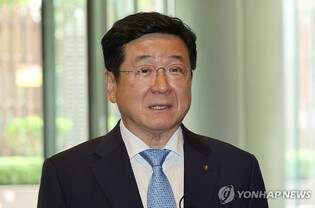
KCCI’s Kim Hyun-soo, Head of Economic Policy, emphasized: “To prevent a loss of manufacturing competitiveness, the government should strengthen its role as a buffer against external shocks by expanding emergency liquidity support, easing regulations, and providing stronger investment incentives.”
알파경제 Kim Jisun Reporter(stockmk2020@alphabiz.co.kr)