

[Alpha Biz= Paul Lee] More than one in five flights operated by South Korean airlines at domestic airports last year departed or arrived later than scheduled, government data showed, with Air Seoul recording the highest delay rate among carriers.
According to data released on February 1 by the Ministry of Land, Infrastructure and Transport (MOLIT) and the aviation industry, the combined average delay rate for domestic and international flights operated by 10 Korean airlines at airports including Incheon International Airport and Gimpo International Airport stood at 23.3% in 2024. This marked an improvement of 2.4 percentage points from 25.7% a year earlier.
Under MOLIT standards, a flight is classified as delayed if it departs from or arrives at the gate more than 15 minutes later than the scheduled time indicated on the ticket. Based on this definition, 159,642 flights out of a total of 684,435 flights operated last year were recorded as delayed.
By route, domestic flights saw 72,276 delays out of 354,813 flights, resulting in a delay rate of 20.4%. International flights recorded 87,366 delays out of 329,622 flights, for a higher delay rate of 26.5%. Both segments improved year on year, with domestic delays down 2.2 percentage points and international delays down 3.3 percentage points.
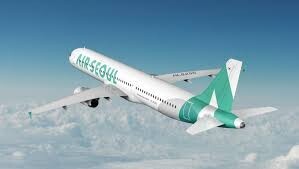
Delay rates varied significantly by airline. Air Seoul, a low-cost carrier affiliated with the Hanjin Group, posted the highest average delay rate at 36.9%, with 5,100 delayed flights out of 13,836 operations. While still the highest among the 10 airlines surveyed, the figure represented an improvement of 4.9 percentage points from 41.8% the previous year.
Other airlines recorded the following delay rates: Jin Air (29.1%), Eastar Jet (26.4%), Aero K (25.0%), Asiana Airlines (24.2%), Air Premia (23.1%), Jeju Air (22.7%), Korean Air (21.4%), and T'way Air (20.9%). Air Busan recorded the lowest delay rate at 16.2%.
Notably, T’way Air, Jeju Air, and Aero K reduced their delay rates by more than five percentage points from the previous year, reflecting meaningful improvements in on-time performance.
Delays attributed to aircraft maintenance—an issue directly linked to aviation safety—totaled 4,520 flights, accounting for 0.7% of all operations, unchanged from the previous year. Among carriers, Air Premia recorded the highest maintenance-related delay rate at 3.4%.
MOLIT said it has incorporated not only airline-specific delay rates but also delay duration into its air transport service evaluations since last year, as part of efforts to further improve punctuality across the industry.
Alphabiz Reporter Kim Jisun(stockmk2020@alphabiz.co.kr)