

 |
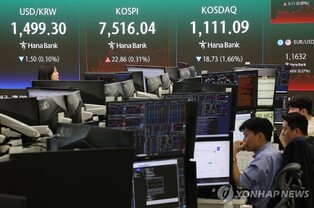
Photo: Korea Exchange |
[Alpha Biz= Paul Lee] South Korea’s stock market could face a sharp downturn if the conflict involving Iran becomes prolonged, with some analysts warning that the KOSPI may fall more than 30 percent under a worst-case scenario.
The concerns follow a steep market reaction after the United States launched airstrikes on Iran. The KOSPI has fallen about 18 percent over the past two days, prompting brokerage houses to release scenario-based outlooks on the potential impact of the crisis.
According to a report released by Daishin Securities on March 4, the market outlook will largely depend on the duration of the conflict.
If the war ends within about a week, Daishin Securities expects the KOSPI and global equity markets to experience a correction of around 5 percent before resuming their upward trend.
However, if the conflict lasts for more than a month, increased volatility in oil prices could lead to a market correction of roughly 10 percent, the report said.
In a longer-term scenario where the conflict continues for six months or more, rising pressure on both oil and grain prices could push the KOSPI into a prolonged downturn.
Under a scenario in which the conflict extends beyond one year, the brokerage warned that the KOSPI could decline by more than 30 percent.
Daishin Securities noted that it expects the situation to stabilize within about a month, urging investors not to overinterpret the crisis or be driven by excessive fear.
“However, if the conflict becomes prolonged and disruptions to the oil supply chain push crude prices sharply higher, the impact on the global economy could be significant,” the report said, adding that past oil price surges have often preceded global economic slowdowns or financial crises.
The brokerage also warned that if the conflict lasts longer than the 3–5 months covered by strategic petroleum reserve (SPR) inventories, oil prices could rise above $100 per barrel.
Market participants say the two key variables are the duration of the war and the level of oil prices.
According to KB Securities, if tensions ease within one to two weeks, crude oil prices are likely to stabilize at $70–$80 per barrel.
If the conflict continues for about a month, oil prices could rise to $80–$100 per barrel. In a more extreme scenario involving the closure of the Strait of Hormuz or attacks on Middle Eastern oil production facilities, prices could surge to $120–$150 per barrel.
Analysts consider the Strait of Hormuz the most critical variable in the situation. Around 25 percent of global seaborne oil trade passes through the strait, while South Korea imports roughly 70 percent of its crude oil and about 20 percent of its liquefied natural gas (LNG) from the Middle East. A blockade could therefore significantly disrupt energy supplies.
IBK Investment & Securities said that if the crisis ends quickly and the market correction remains short-lived, the downturn could instead help ease technical overheating in the stock market and potentially strengthen its rebound.
However, the brokerage warned that if tensions in the Middle East persist, surging oil prices and a global economic slowdown could follow, potentially triggering a renewed inflation wave and a broad decline in global asset markets.
Alphabiz Reporter Paul Lee(hoondork1977@alphabiz.co.kr)