

 |
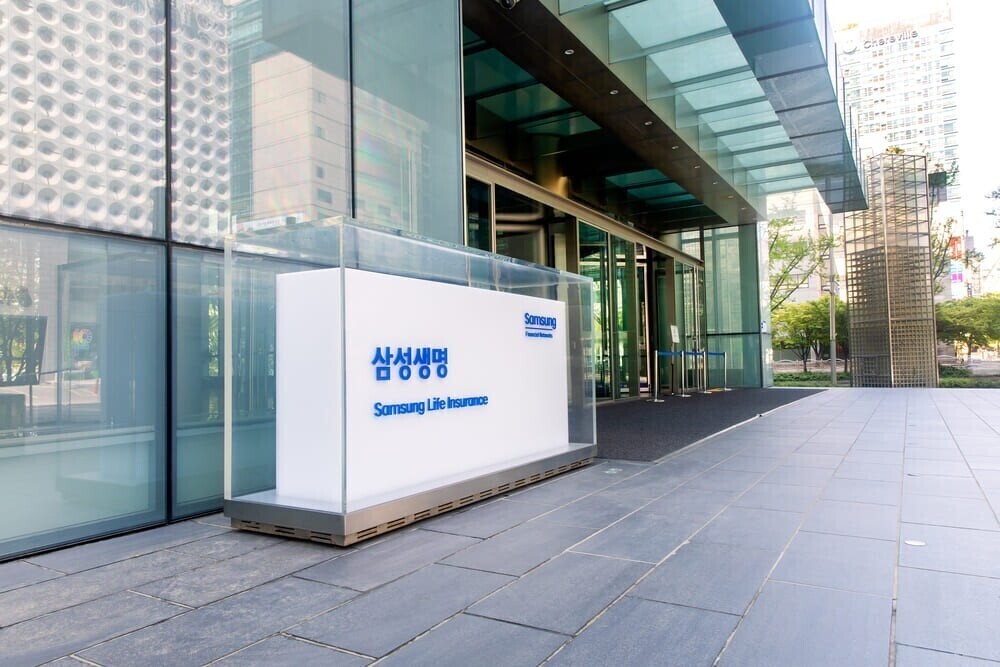
Samsung Life Insurance headquarters. (Photo: Samsung Life Insurance) |
[Alpha Biz= Paul Lee] Seoul, South Korea — Participating policyholders at Samsung Life Insurance are expected to initiate lawsuits early next year after Korea’s Financial Supervisory Service (FSS) ordered the company to discontinue its previously permitted non-standard accounting treatment for participating insurance contracts.
Kim Kwang-joong, an attorney who previously represented plaintiffs in high-profile cases such as the Samsung Biologics accounting litigation, said on December 3, “Some policyholders have already expressed interest in joining a lawsuit once Samsung’s business report is released in March. We may move forward at that time.”
Samsung Life had purchased an 8.51% stake in Samsung Electronics in the 1980s and 1990s using premiums paid by participating policyholders. Participating insurance products require insurers to return a portion of investment profits to policyholders in the form of dividends.
Under IFRS 17, the portion attributable to participating policyholders must be recognized as insurance contract liabilities. However, in late 2022 Samsung Life received a rare exception from the FSS allowing it to classify this amount under “policyholder equity adjustment”—a treatment that drew controversy and was criticized by the Korea Accounting Standards Board and civil society groups. Critics argued the exception undermined policyholders’ rights, violated international accounting standards, and effectively helped maintain the Samsung group’s governance structure.
On December 1, the FSS reversed its stance, ordering Samsung Life to end the non-standard accounting practice and apply the new treatment in its business report for the fiscal year ending March 2025.
Industry observers believe Samsung Life may classify the participating portion as equity rather than liabilities, which legal experts say could strengthen policyholders’ grounds for litigation. Such classification may be interpreted as a declaration that the company does not intend to realize investment gains, potentially breaching the “principle of good faith” embedded in the original insurance contracts. Samsung Life’s stake in Samsung Electronics is valued at roughly KRW 50 trillion, meaning any disposal would generate substantial capital gains.
In a 2010 case involving 2,802 participating policyholders seeking unpaid dividends, plaintiffs argued they were harmed because Samsung Life withheld evaluation gains while proceeding with its IPO. The court, however, ruled against them, noting that “loss cannot be recognized because dividends may be paid once the assets (Samsung Electronics shares) are eventually sold.”
Attorney Kim noted the situation has now fundamentally changed:
“At that time, Samsung Life had never explicitly stated it would not sell the shares. If the company now formally declares it will not dispose of them, the legal circumstances are entirely different. A claim for damages becomes logically possible.”
Alphabiz Reporter Paul Lee(hoondork1977@alphabiz.co.kr)