

 |
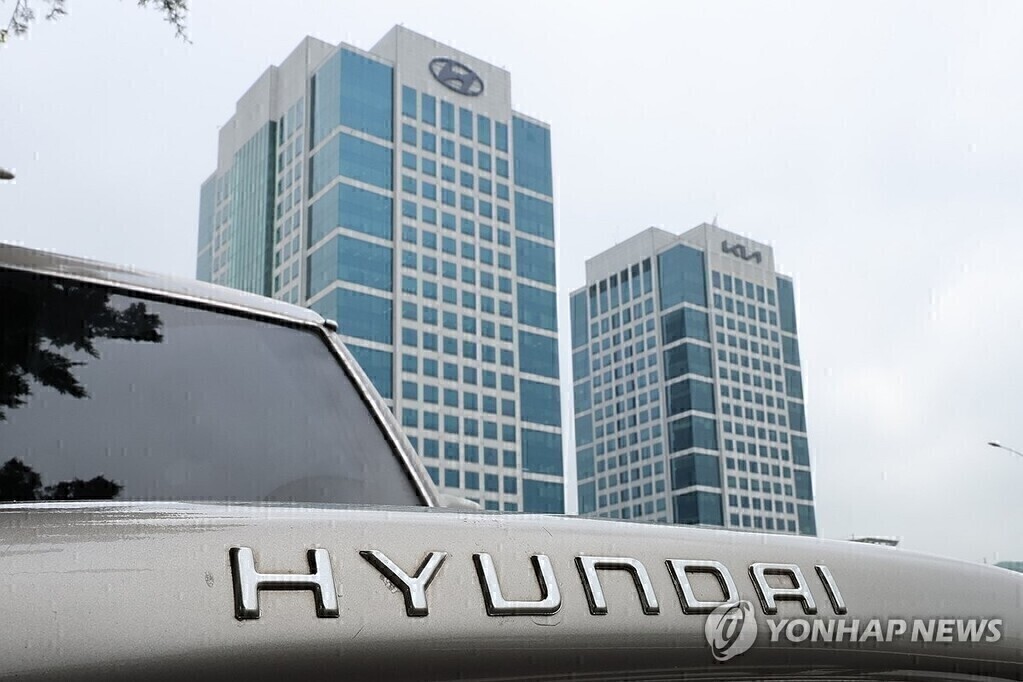
Photo courtesy of Yonhap News |
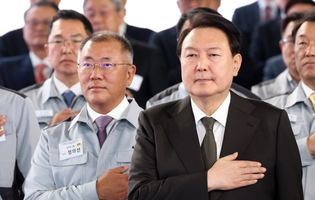
[Alpha Biz= Kim Jisun] Hyundai Motor Company and Kia Corporation announced that they are establishing a large-scale battery development hub to reinforce their next-generation electrification competitiveness. On the 28th, the companies held a “Future Mobility Battery Anseong Campus Topping-Out Ceremony” at the Anseong General Industrial Complex No. 5 in Gyeonggi Province, marking the start of full-scale efforts to build advanced battery R&D infrastructure.
The Future Mobility Battery Anseong Campus will cover approximately 197,000 square meters of land, with a total floor area of around 111,000 square meters. Hyundai Motor and Kia are investing KRW 1.2 trillion in the project, which is currently under construction and scheduled for completion by the end of next year.
Once completed, the site is expected to become the Group’s first large-scale, battery-specialized R&D center capable of comprehensively validating battery design and manufacturing technologies developed by Hyundai and Kia. The campus will feature high-complexity testing environments that precisely reflect real vehicle requirements.
Through this facility, the companies aim to secure not only advanced cell design capabilities but also integrated control technologies that connect production processes with vehicle systems. Hyundai Motor and Kia also plan to internalize an end-to-end validation framework—spanning materials, cells, modules, packs, and complete vehicles—to ensure holistic battery performance and safety evaluation.
R&D efforts at the Battery Campus will primarily focus on high-performance lithium-ion battery cells for next-generation electrified vehicles, including EVs and EREVs (Extended-Range Electric Vehicles). The companies will expand their research scope to encompass various cell formats and materials in line with market and technology trends.
Leveraging expertise accumulated throughout the vehicle-battery development process, Hyundai Motor and Kia also intend to strengthen technological capabilities that can be extended to future mobility businesses such as robotics and AAM (Advanced Air Mobility).
Alphabiz Reporter Kim Jisun(stockmk2020@alphabiz.co.kr)