

 |
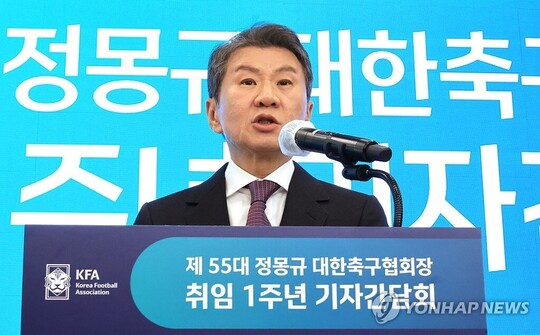
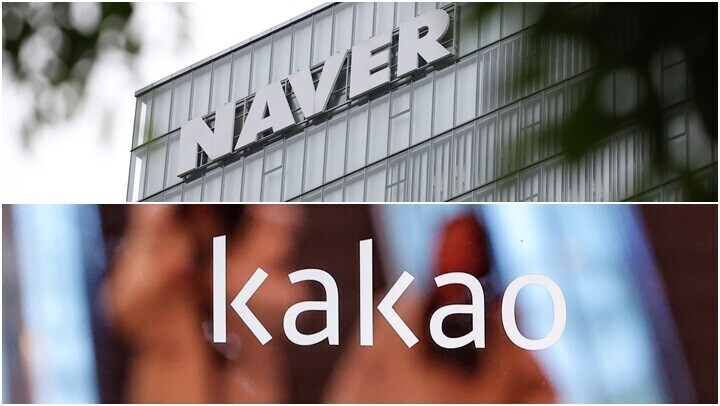
Photo courtesy of Yonhap News |
[Alpha Biz= Ellie Kim] SEOUL, June 1, 2026 — Shares of South Korea’s leading internet platforms, Naver and Kakao, have underperformed the broader market rally this year, as investors remain cautious over their ability to generate meaningful returns from artificial intelligence (AI) initiatives.
According to the Korea Exchange, Naver shares rose 14.15% on May 29 to close at KRW 234,000, while Kakao gained 4.61% to KRW 41,950, supported by short-term factors including expectations of potential AI collaboration discussions with Jensen Huang.
Despite the recent rebound, both stocks remain significantly below their levels at the start of the year, with Naver down 5.26% and Kakao plunging 32.45%, sharply underperforming the 96.68% gain in the benchmark KOSPI index.
Brokerages have responded by lowering target prices for both companies. Several firms, including Kiwoom Securities, Mirae Asset Securities, KB Securities, and Eugene Investment & Securities, have cut their outlooks for Naver, while multiple brokerages have also downgraded Kakao.
The primary concern cited is the lack of clear monetization from AI-driven businesses. For Naver, increased investments in commerce infrastructure have weighed on costs, while AI services have yet to demonstrate strong revenue growth. Kakao, meanwhile, is improving profitability through restructuring, but analysts say it may take time before AI-driven services translate into meaningful earnings.
Market experts note that both companies need to prove tangible AI-driven revenue streams to regain investor confidence. Until then, valuation re-rating is likely to remain limited.
Analysts also suggest that a structural revaluation could occur if the companies successfully transition from domestic-focused platforms to full-fledged AI platforms. Emerging use cases such as AI agent-based commerce and payment ecosystems could eventually unlock new growth opportunities.
For now, however, AI adoption among Korean platform companies is largely focused on improving operational efficiency rather than driving top-line growth, reflecting a more defensive stance amid a slow recovery in the broader digital advertising market.
Alphabiz Ellie Kim 인턴기자(press@alphabiz.co.kr)