

 |
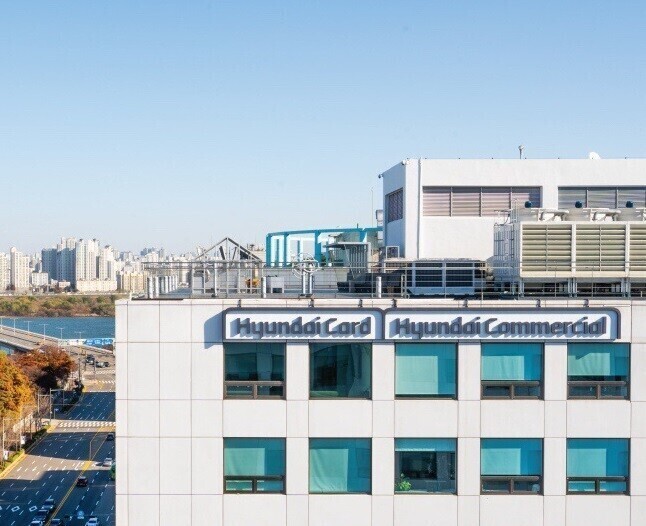
Photo = Hyundai Card |
[Alpha Biz= Paul Lee] Hyundai Card has achieved record-high annual membership fee revenue, driven by strong performance in its premium card segment. However, rising costs associated with brand marketing and customer benefits are emerging as a growing burden, highlighting challenges behind its growth strategy.
According to the Financial Supervisory Service on March 30, Hyundai Card’s membership fee revenue reached KRW 375.7 billion last year, up 10.6% from KRW 339.8 billion a year earlier. This marks the highest among Korea’s eight major card issuers, surpassing second-ranked Samsung Card (KRW 299.5 billion) by 24.4%.
The growth has been largely driven by Hyundai Card’s premium product lineup. The company has focused on expanding high-fee premium cards to attract affluent customers while securing stable revenue streams, particularly amid declining profitability due to lower merchant fees and tighter household lending regulations.
Hyundai Card’s premium cards carry annual fees ranging from KRW 150,000 to as high as KRW 3 million, significantly exceeding the top-tier annual fee of KRW 700,000 offered by Samsung Card. The company has also shifted its strategy beyond traditional luxury-focused marketing, promoting everyday benefits to broaden its premium customer base.
Premium customers remain highly valuable, as they not only pay higher fees but also demonstrate stronger spending power. Average card spending per premium customer rose from KRW 3.06 million in 2023 to KRW 3.27 million in 2024 and KRW 3.40 million in 2025, nearly three times higher than the overall average of KRW 1.24 million per customer as of end-2024.
This strong performance has helped Hyundai Card solidify its position among Korea’s top-tier card issuers. The company reported net profit of KRW 350.3 billion last year, ranking behind Samsung Card (KRW 645.9 billion) and Shinhan Card (KRW 476.7 billion).
Additionally, supported by robust spending from premium customers, Hyundai Card’s cumulative personal credit card spending (lump-sum and installment payments) reached KRW 2.17 trillion as of February this year, up 3.6% from KRW 2.09 trillion a year earlier.
Despite these gains, rising marketing and benefit costs tied to premium card offerings are increasing pressure on profitability, drawing attention to how the company will balance growth with cost efficiency going forward.
Alphabiz Reporter Paul Lee(hoondork1977@alphabiz.co.kr)