

 |
Photo courtesy of Yonhap News |
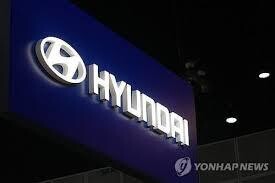
[Alpha Biz= Ellie Kim] Hyundai Motor reported a decline in sales in China, the world’s largest automotive market, highlighting challenges amid the rapid transition toward electric vehicles (EVs).
According to its quarterly report released on May 27, Hyundai Motor sold approximately 27,000 units in China during the first quarter, down 7.6% year-on-year. The company attributed the decline to weakening demand for internal combustion engine (ICE) vehicles, which still dominate its product lineup in the market.
Despite promotional efforts that boosted sales of certain models such as the Tucson L, overall performance was weighed down by structural market changes. Data from the China Passenger Car Association shows Hyundai’s annual sales in China have steadily declined in recent years, reflecting intensifying competition from domestic EV makers such as BYD, Geely, Changan, and XPeng.
The contrast is particularly stark compared to Hyundai’s strong performance in other key markets. In the United States, the company achieved record first-quarter sales of 223,705 units, up 1.2% year-on-year, driven by SUVs and hybrid models. In India, sales rose 8.5% to 166,578 units, marking another record.
To regain momentum in China, Hyundai is accelerating localization efforts and expanding its EV lineup. The company recently unveiled a China-specific electric SUV, the Ioniq V, and plans to introduce up to 20 new models—including EVs and extended-range electric vehicles (EREVs)—over the next five years.
Hyundai is also strengthening partnerships with local technology firms, integrating autonomous driving assistance systems from Momenta and AI-powered infotainment services based on Baidu’s mapping and large language model technologies.
Alphabiz Ellie Kim 인턴기자(press@alphabiz.co.kr)