

 |
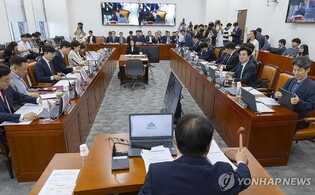
Photo courtesy of Yonhap News |
[Alpha Biz=Moon Sunjung·Lee Hyeongjin] Reports that Hanmi Semiconductor is supplying TC bonder equipment to Samsung Electronics have been confirmed to be unfounded, according to industry sources.
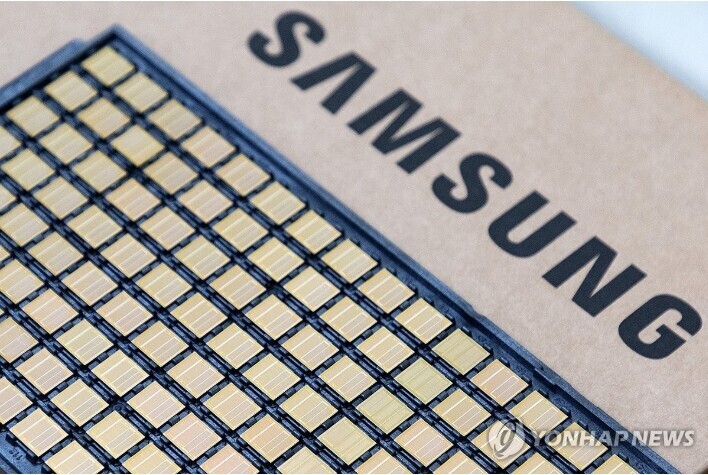
Based on Alpha Economy reporting compiled on Monday, Samsung Electronics has confirmed that it will continue to use TC bonders based on the TC-NCF (Thermal Compression–Non-Conductive Film) process supplied by its affiliate SEMES for HBM4 production.
Due to the characteristics of the TC-NCF process, a non-conductive film (NCF) must be inserted in advance between semiconductor chips during bonding.
By contrast, Hanmi Semiconductor’s dual TC bonder—at the center of recent market rumors—operates in conjunction with an MR-MUF (Molded Reflow–Mass Underfill) process, in which chips are first stacked and a liquid encapsulant (MUF) is subsequently injected into the gaps and cured simultaneously.
While Hanmi Semiconductor has also secured TC-NCF-based TC bonder technology, Samsung Electronics is said to have ultimately selected equipment from its in-house subsidiary SEMES.
A source familiar with Samsung’s internal decision-making said, “As chip thickness becomes significantly thinner, suppressing warpage is increasingly important, and structural stability becomes critical as the number of stacked layers rises. This is why Samsung has adopted the TC-NCF approach.” The source added, “It would be more accurate to say that Samsung Semiconductor has no interest in Hanmi Semiconductor’s TC bonder.”
From HBM4 onward, chip thickness is expected to decrease further, while the number of stacked layers is projected to rise from 12 layers to 16 layers or more.
Yoon Yong-pil, an adjunct professor at Hankuk University of Foreign Studies, said, “As Samsung Electronics has continued to deliver solid results with HBM4, speculation emerged that it might switch from its affiliate SEMES—whose TC-NCF approach struggled during HBM3E—to Hanmi Semiconductor’s equipment, as SK hynix did. That hypothesis appears to have evolved into rumors of Hanmi supplying equipment to Samsung.” He added, “While such a move might be conceivable for Micron Technology, which is facing challenges with HBM4, it would be difficult for Samsung Electronics to adopt Hanmi’s equipment, particularly given its relationship with SEMES.”
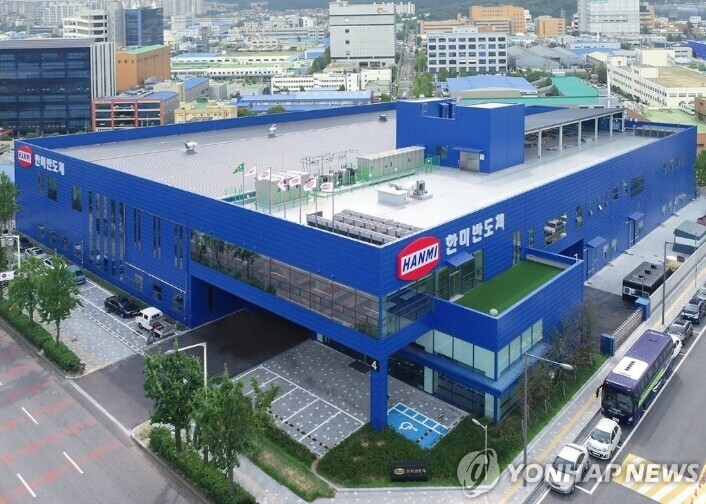 |
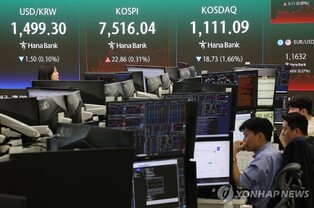
Photo courtesy of Yonhap News |
According to the securities industry, unverified reports have been circulating widely that Hanmi Semiconductor could supply 200 units of its dual TC bonder to Samsung Electronics and 100 units to Micron.
Meanwhile, Bank of America Merrill Lynch said in a report published on Sunday that Hanmi Semiconductor’s TC bonder (TCB) sales mix in 2024 was heavily concentrated on SK hynix (69 percent) and Micron (23 percent). The bank projected that the mix would shift next year to SK hynix (28 percent), Micron (34 percent), Samsung Electronics (25 percent), and Chinese semiconductor companies (13 percent), noting that increased exposure to Samsung and Chinese chipmakers would serve as key growth drivers.
Merrill Lynch added that the ramp-up of new fabrication plants—including SK hynix’s Yongin fab and Samsung Electronics’ P5 plant—would begin to meaningfully contribute to earnings in 2027–2028, supported by a high-margin business structure.
Reporters made multiple attempts to contact Hanmi Semiconductor for comment, but received no response.
Alphabiz 문선정 기자(press@alphabiz.co.kr)