

 |
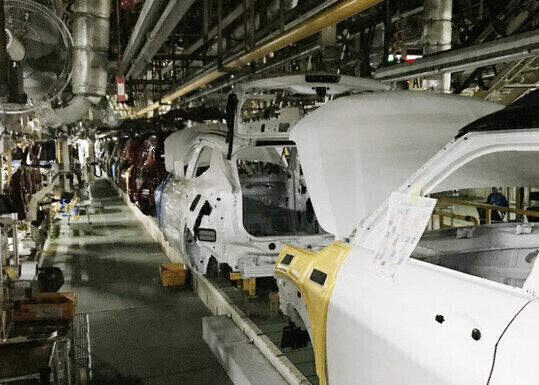
Photo: GM Korea |
[Alpha Biz= Paul Lee] Seoul, South Korea — GM Korea’s recent decision to close nine company-operated service centers and transition to a partner-centered service network has reignited concerns over the company’s potential withdrawal from the Korean market.
Amid falling exports driven by U.S. tariff hikes and sluggish domestic sales, speculation about GM Korea’s exit has been gaining traction. However, the company has also reaffirmed its commitment to strengthening domestic operations, including plans to expand its luxury Cadillac brand and recent meetings between GM Korea executives, the GM Korea Dealers Council, and the Cooperative Service Network Council to outline strategies for boosting local sales.
Despite these moves, skepticism surrounding GM Korea’s long-term commitment persists. Labor unions and political leaders continue to voice strong concerns, signaling that the debate over GM Korea’s future is likely to continue.
According to industry sources on December 3, the Korean Metal Workers’ Union, together with lawmakers from the Democratic Party, Rebuilding Korea Party, Progressive Party, and Social Democratic Party, will host a National Assembly forum on December 4 titled “Beyond the Exit Rumors: Pathways for Sustainable Development of GM Korea.”
The forum will feature presentations on “Challenges within Global GM and Strategies for Responding to GM Korea Exit Rumors” and “Regional Automotive Industry Policy and Domestic Supply Chain Stabilization.” Officials from the Ministry of Trade, Industry and Energy and the ruling Democratic Party’s policy committee are also scheduled to participate.
Earlier, the GM Korea labor union held a press conference at the National Assembly, criticizing the closure of the nine service centers as “a clear violation of labor-management agreements and an act that disregards basic responsibility and sound judgment.”
Some analysts argue that shifting from directly operated centers to a partner-led aftersales model reflects GM’s global cost-optimization strategy—given that GM typically relies on dealer-run service networks in most markets. Others, however, interpret the move as a step toward scaling down operations in Korea.
GM Korea Executive Vice President for Sales, Service, and Marketing Gustavo Colossi recently met with representatives of the GM Korea Dealers Council and Cooperative Service Network at the Chevrolet Shinchon dealership to discuss ways to strengthen sales and service competitiveness.
During the meeting, Colossi emphasized, “Let’s continue building a stronger and more competitive future together,” adding that cooperative service networks are already providing “a greater share of customer service than directly operated centers.”
Alphabiz Reporter Paul Lee(hoondork1977@alphabiz.co.kr)