

 |
Photo courtesy of Yonhap News |
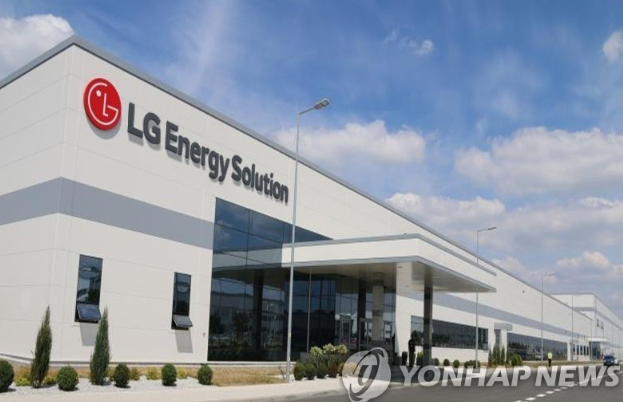
[Alpha Biz= Kim Jisun] LG Energy Solution confirmed on March 17 that Tesla is the customer behind its previously undisclosed KRW 6 trillion ($6.4 billion) energy storage system (ESS) battery supply contract signed in July last year. This marks the first time Tesla has publicly identified its ESS battery supplier.
The partnership extends cooperation between the two companies beyond electric vehicle batteries into the power storage sector.
According to industry sources, the U.S. government disclosed the agreement in a fact sheet released during the Indo-Pacific Energy and Mineral Security (IPEM) Ministerial and Business Forum held in Tokyo on March 14–15.
The U.S. government stated that LG Energy Solution plans to supply lithium iron phosphate (LFP) batteries worth $4.3 billion from its Lansing, Michigan plant to Tesla.
The batteries will be used in Tesla’s Megapack 3 energy storage systems produced in Houston. Megapack is Tesla’s large-scale ESS solution, and the company is a global leader in the “power generation package” market, which stores electricity generated from renewable sources such as solar energy.
Despite signing its largest-ever ESS battery supply contract in July last year, LG Energy Solution had not disclosed the customer due to a non-disclosure agreement (NDA), as Tesla is known for its strict confidentiality regarding supply chain information.
Industry observers believe the U.S. government disclosed the customer after obtaining Tesla’s consent.
Analysts say the decision by both the U.S. government and Tesla to explicitly name LG Energy Solution as the supplier reflects a broader push to reduce reliance on China in manufacturing supply chains.
Tesla has previously used batteries from China’s CATL for its ESS products. LFP batteries—known for their lower cost and improved safety—are widely used in ESS, and China has been a dominant player in this segment.
However, with the Trump administration imposing high tariffs on Chinese batteries and emphasizing policies to exclude Chinese components and materials, U.S. companies have been accelerating efforts to diversify their supply chains.
Alphabiz Reporter Kim Jisun(stockmk2020@alphabiz.co.kr)