

 |
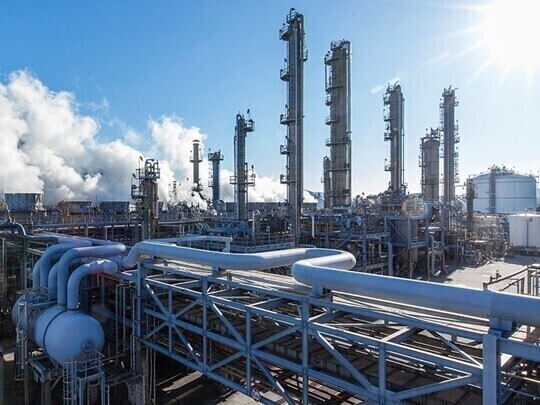
The No. 2 plant of Yeochun NCC in Yeosu. |
[Alpha Biz= Kim Jisun] Yeochun NCC, the country’s third-largest ethylene producer, plans to suspend operations at two of its petrochemical plants in Yeosu, cutting overall production by about 60% as part of a broader restructuring of South Korea’s petrochemical industry.
According to industry sources on Sunday, Yeochun NCC has submitted a business restructuring plan to the government that includes halting operations at its No. 2 and No. 3 plants in Yeosu.
The company had already shut down its No. 3 plant in August last year. With the additional suspension of the No. 2 facility, the company could reduce naphtha cracking center (NCC) capacity by as much as 1.4 million tons annually. The two plants have ethylene production capacities of 900,000 tons and 500,000 tons, respectively.
Yeochun NCC’s major shareholders, Hanwha Solutions and DL Chemical, are understood to have reached an agreement to support the restructuring plan.
Under the proposal, Hanwha Solutions and DL Chemical will inject about 500 billion won ($375 million) into Yeochun NCC. The company is also considering establishing a joint venture with Lotte Chemical that would combine operations with Lotte Chemical’s Yeosu facility.
The move follows earlier discussions among Hanwha Solutions, DL Chemical and Lotte Chemical, which had submitted restructuring plans to the Ministry of Trade, Industry and Energy as part of a government-led initiative to enhance competitiveness and accelerate structural reform in the domestic petrochemical sector.
A Yeochun NCC official said the plan involves the three companies jointly establishing and operating a new entity, with some downstream operations expected to be scaled back.
However, a Lotte Chemical representative said the creation of a joint venture has not yet been finalized.
The restructuring effort is part of a broader industry agreement reached in August last year, when the Ministry of Trade, Industry and Energy and 10 petrochemical companies signed a voluntary pact to revitalize the sector.
Under the agreement, the industry aims to reduce NCC capacity by 2.7 million to 3.7 million tons — equivalent to about 18% to 25% of the country’s total capacity, which currently stands at around 14.7 million tons.
Alphabiz Reporter Kim Jisun(stockmk2020@alphabiz.co.kr)