

 |
Photo courtesy of Yonhap News |
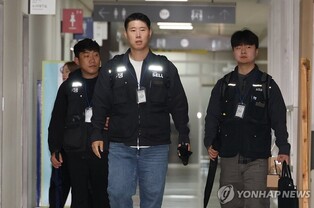
[Alpha Biz= Paul Lee] South Korea’s Fair Trade Commission (FTC) has launched an investigation into Samsung Electronics following a complaint alleging that the company engaged in unfair subcontracting practices during its fifth-generation (5G) telecommunications business in the United States.
According to an exclusive report by The Kyunghyang Shinmun on March 3, the FTC began an investigation late last year after receiving a complaint that Samsung Electronics had improperly terminated or reduced outsourced orders to a subcontractor, identified as Company A, in the U.S. market. Company A is the U.S. subsidiary of a South Korean small and medium-sized cable supplier.
Samsung Electronics approved Company A in 2019 as a primary supplier of cables used in telecommunications equipment for its U.S. 5G operations and subsequently signed a subcontracting agreement with the firm. As demand for its 5G business grew, Samsung allegedly pressured the subcontractor to shorten delivery times, stating that “the lead time from production to delivery is currently too long” and that “orders placed today should be delivered by tomorrow,” effectively urging faster turnaround.
In response, Company A relocated its manufacturing facility from Irvine, California, to Dallas, Texas, in early 2021. Dallas is home to a logistics warehouse operated by Samsung Electronics’ local subsidiary.
However, in June 2021, Samsung notified the supplier that U.S. telecommunications carrier Verizon had changed the type of cables used in its 5G equipment and gradually reduced orders as a result. Since Company A’s cables were intended for Verizon-related supply, Samsung said the change made a reduction in orders unavoidable.
Actual orders placed with Company A fell sharply—from about $5.2 million in the second half of 2020, shortly before the factory relocation, to roughly $560,000 in the second half of 2022, representing a decline of nearly 90 percent. Orders were completely halted in April 2023, and Company A’s U.S. subsidiary filed for bankruptcy in December of the same year after experiencing financial difficulties.
The Korean headquarters of Company A subsequently filed for dispute mediation with the Korea Fair Trade Mediation Agency under the FTC, claiming it suffered losses exceeding $6 million due to Samsung’s alleged unfair practices.
A key point of contention was whether the relocation of the Dallas plant was carried out at Samsung’s request. Company A argued it had little choice but to comply with Samsung’s demands, given that the electronics giant accounted for most of its revenue. Samsung, however, maintained that the relocation was an independent business decision by the subcontractor.
The mediation agency concluded that the relocation was likely an unavoidable decision made in response to Samsung’s requests. The assessment considered evidence that Samsung provided detailed supply forecasts and urged the subcontractor to establish the Dallas facility quickly. It also noted that Company A derived more than 90 percent of its revenue from Samsung, making it difficult for the supplier to refuse such requests.
In August last year, the mediation agency proposed a settlement requiring Samsung Electronics to pay approximately $1.59 million, along with 74 million Korean won, to cover equipment investment losses and other damages. Samsung rejected the proposal, prompting the matter to move into a formal investigation by the FTC.
The FTC will now examine whether Samsung’s reduction or termination of orders constitutes an “unfair cancellation of subcontracting.” Under South Korea’s subcontracting law, a principal contractor is prohibited from canceling or modifying manufacturing or service orders without a valid reason attributable to the subcontractor.
While the mediation agency acknowledged that Samsung had unilaterally halted orders without sufficient consultation, it previously refrained from determining whether the reduction in order volume alone constituted a violation of subcontracting law.
Samsung Electronics denied the allegations, stating that it sources cables from multiple suppliers and therefore had no reason to pressure Company A to relocate its factory. The company also said it never required equipment investments from the supplier.
“The reduction in orders to Company A was solely due to a lack of orders from our customer,” Samsung said. “It does not constitute an unfair cancellation of subcontracting, and there has been no violation of the law.”
This is not the first time Samsung Electronics has faced controversy over subcontracting practices. In 2012, the company was fined 1.6 billion won by the FTC for improperly canceling contracts with 151 subcontractors.
Alphabiz Reporter Paul Lee(hoondork1977@alphabiz.co.kr)