

 |
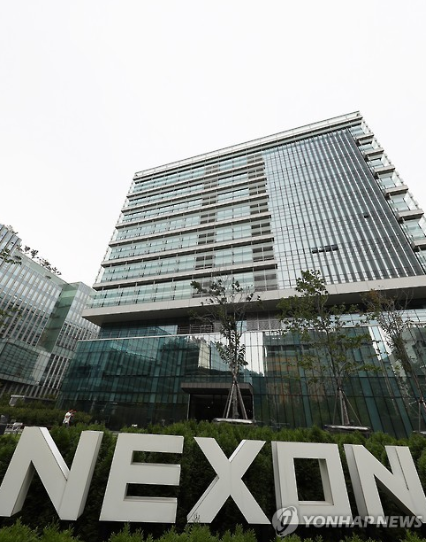
Photo courtesy of Yonhap News |
[Alpha Biz= Kim Jisun] A fresh controversy surrounding alleged probability manipulation in a new mobile game by Nexon Korea is rapidly escalating, dealing another blow to the company’s corporate credibility.
The dispute centers on Maple Grow, a recently launched mobile title, where Nexon is accused of manipulating in-game probability systems—marking yet another instance of such practices coming to light. Industry observers warn that repeated revelations of this nature could inflict serious and lasting damage on the company’s trustworthiness.
Experts argue that the controversy is not unrelated to Nexon’s aggressive profit-maximization strategy, which they say has been driven by efforts to increase dividends for the founding family, including Yoo Jung-hyun, chairman of Nexon’s holding company NXC.
At the heart of the scandal is the game’s “Ability” system, which allows players to reset character attributes. Nexon is alleged to have configured the system so that the highest-tier attributes were structurally unobtainable for roughly one month starting from the game’s launch on November 6, 2025.
In effect, the probability of obtaining the top-tier attributes was set at 0%, while users were neither informed of this fact nor prevented from making paid purchases tied to the system.
 |
Photo courtesy of Nexon |
More troubling, critics say, is the allegation that Nexon proceeded with corrective patches after discovering the issue without disclosing the underlying facts to users.
As public criticism mounted, Nexon CEOs Kang Dae-hyun and Kim Jung-wook issued a belated public apology on the 26th.
The controversy unfolds against the backdrop of massive inheritance tax obligations faced by the family of Nexon founder the late Kim Jung-ju. The tax bill—estimated at between 5.3 trillion and 6 trillion won—was reportedly settled early in 2024 through in-kind payments.
Amid this financial pressure, Nexon is said to have strengthened its monetization models to expand dividends for the founding family, a strategy that critics argue has coincided with repeated probability-related issues and controversial premium-priced share transactions.
In August, NXC acquired shares held by Chairman Yoo’s family for approximately 666.2 billion won, prompting allegations that the unlisted holding company paid above-market prices. NXC has also reportedly continued to receive and expand dividends worth hundreds of billions of won in connection with the government’s in-kind tax payment scheme.
Such elevated dividend payouts by the holding company inevitably place pressure on Nexon Korea to maximize revenue and profits, analysts say, potentially translating into intense performance KPI demands on professional management.
NXC’s ownership structure shows Chairman Yoo holding a 33.35% stake, while Kim Jung-ju’s daughters, Kim Jung-min and Kim Jung-yoon, each own 17.16%. Of the 25.5 billion won paid out in dividends in 2024, roughly 17.7 billion won went to the founding family—nearly double the amount distributed the previous year. Dividends for 2025 are widely expected to be even higher.
Han Chi-ho, an economist and professor of public administration, noted that under such circumstances, professional managers face mounting pressure to demonstrate short-term performance to address inheritance tax concerns, sustain dividends, and maintain corporate valuation.
“With new user growth stagnating, the easiest way to boost revenue is to extract more spending from existing users,” Han said. “Probability-based items become the core mechanism in that strategy.”
Against this backdrop, repeated probability errors in top-grossing games—such as the recent Maple Grow case—are sufficient to raise suspicions that internal verification systems were either incapacitated in the pursuit of profit maximization or deliberately neglected, critics argue.
Alphabiz Reporter Kim Jisun(stockmk2020@alphabiz.co.kr)