

 |
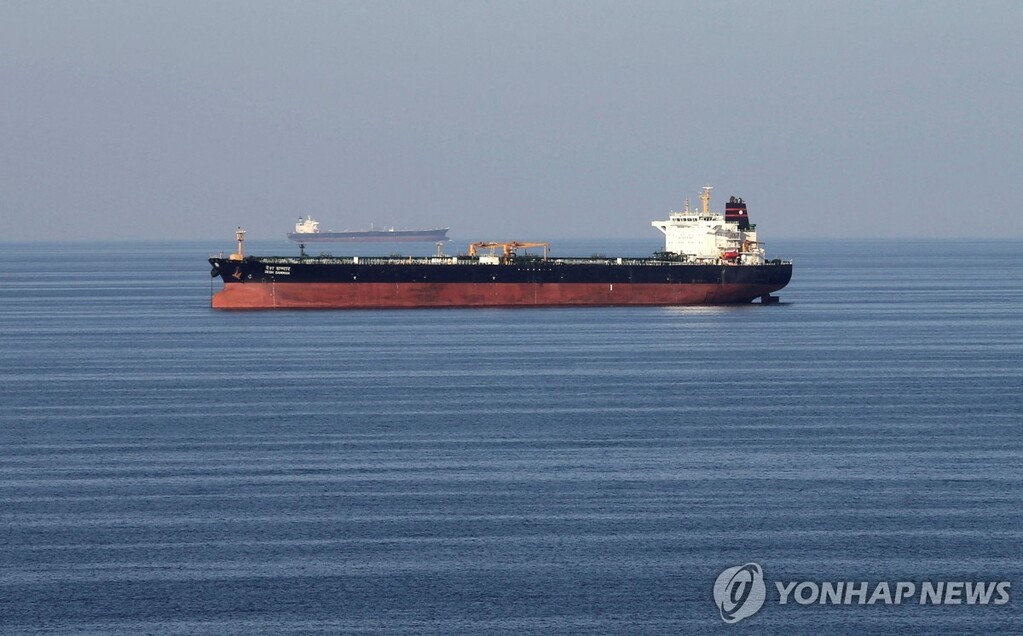
An oil tanker transits the Strait of Hormuz. (Photo: Yonhap News Agency) |
[Alpha Biz= Kim Jisun] HMM has rerouted a container ship that was transiting the Strait of Hormuz to Dubai in the United Arab Emirates, following threats from Iran’s Revolutionary Guard to respond forcefully to vessels passing through the strait, according to South Korea’s Ministry of Oceans and Fisheries and shipping industry sources on March 3.
The decision was made to ensure the safety of crew members and cargo. However, industry officials cautioned that even Dubai cannot be considered entirely secure, as airspace closures across Iran, Israel, Bahrain, the UAE, Qatar, and Kuwait are disrupting regional logistics and aviation hubs. Some global carriers have already suspended operations in the area.
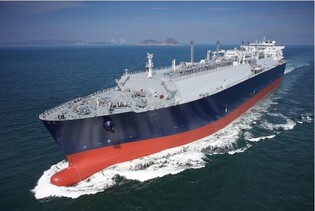
Approximately 30 Korean-flagged vessels, including those operated by HMM and Pan Ocean, are currently navigating near the strait. The government and the Korea Shipowners’ Association have instructed ships to move to safer waters and temporarily restrict additional entries into the area.
The Strait of Hormuz is a critical chokepoint through which 20–30% of global oil shipments pass. South Korea imports roughly 69% of its crude oil from the Middle East, with more than 95% of that volume transported via the strait—highlighting the vulnerability of the country’s energy supply chain.
The government has activated an interagency emergency response task force to monitor developments around the clock. The Ministry of Trade, Industry and Energy said South Korea currently holds oil and petroleum product reserves equivalent to about 208 days of supply, suggesting limited short-term disruption. However, prolonged instability could drive up global oil prices and increase domestic inflationary pressures. Liquefied natural gas (LNG) supply risks are seen as more limited, as dependence on Qatar accounts for less than 20% of total imports.
Major Korean corporations operating in the region have also taken precautionary measures. Samsung Electronics has relocated staff in Iran and Israel to safer areas such as Dubai and Egypt or shifted them to remote work. Hyundai Motor Group has strengthened emergency communication systems and prepared contingency logistics plans.
According to the Foreign Ministry, about 21,000 South Korean nationals are residing in 13 Middle Eastern countries, including 616 in Israel and 59 in Iran. The Defense Ministry said it is prepared to deploy military assets if requested.
Alphabiz Reporter Kim Jisun(stockmk2020@alphabiz.co.kr)