

 |
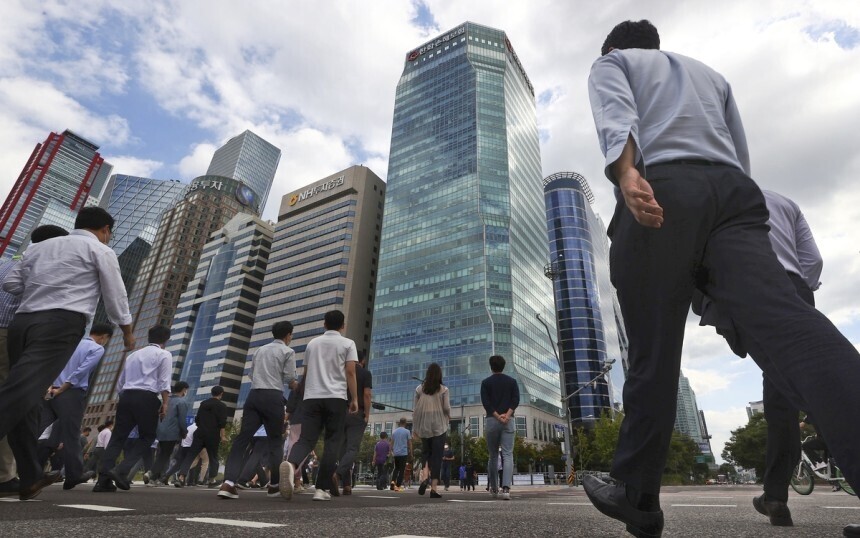
Photo courtesy of Yonhap News |
[Alpha Biz= Kim Jisun] A majority of Korea’s major corporations have either not finalized or do not have investment plans for next year, according to new survey results. Despite accelerating adoption of artificial intelligence (AI) infrastructure across industries, two out of three companies report having no AI-related investment plans.
The Korea Economic Research Institute (KERI) announced on December 7 that, based on its survey of Korea’s top 500 companies by revenue, 59.1% of responding firms said they have not yet established investment plans for 2026 or have no plans at all. A total of 110 companies participated in the survey.
According to the findings, 43.6% have not yet set their investment plans, while 40.9% have established a plan, and 15.5% said they have no investment plans for next year.
Among companies that have not finalized their plans, the reasons cited included:
Organizational restructuring or personnel changes (37.5%)
Need to first assess domestic and global risk factors (25.0%)
Uncertain economic outlook for 2025 (18.8%)
Among firms that have set plans, only 13.3% said they would increase investment, while 53.4% plan to maintain current levels and 33.3% expect to reduce investment.
Of the 32 companies planning to scale back or forego investment, key reasons cited were:
Negative domestic and global economic outlook (26.9%)
Risks from rising foreign exchange and raw material prices (19.4%)
Weakening domestic demand (17.2%)
U.S.-driven uncertainties (12.9%)
Despite rapid AI adoption and growing focus on AI transformation (AX), 63.6% of respondents said they have no AI investment plans.
Among the 36.4% of companies that have set or are reviewing AI investment plans, the top objectives were:
Enhanced production and operational efficiency (55.1%)
Advanced decision-making capabilities (15.3%)
Product and service innovation (12.7%)
Improved customer experience (9.3%)
When asked about major investment risks for next year, companies pointed to the expansion of protectionist measures such as tariffs and deepening supply chain instability (23.7%) as the greatest concern. This was followed by:
Economic slowdown in major countries (22.5%)
High exchange rates (15.2%)
Household debt and financial market instability (9.1%)
Rising energy and raw material prices (9.1%)
알파경제 Kim Jisun Reporter(stockmk2020@alphabiz.co.kr)