 |
Photo courtesy of Yonhap News |
[Alpha Biz= Kim Jisun] Members of the Bank of Korea Monetary Policy Board voted unanimously on Jan. 15 to keep the benchmark interest rate unchanged at 2.50% for a fifth consecutive meeting, citing heightened risks stemming from the foreign exchange market and housing prices.
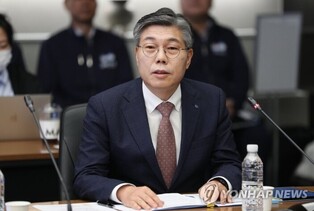
According to the minutes of the Monetary Policy Board meeting released on Monday, all six members except Governor Rhee Chang-yong agreed that maintaining the current policy rate was appropriate.
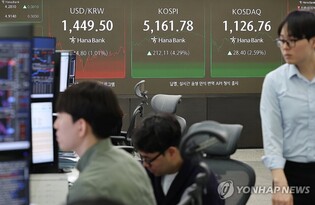
One board member said there had been no meaningful change in economic conditions or indicators warranting a policy adjustment compared with the previous meeting in late November. Despite narrowing interest rate differentials following U.S. policy rate cuts and various stabilization measures by authorities, the member noted that elevated exchange rates persisted due to external uncertainties and mismatches in foreign exchange supply and demand. Market interest rates have also risen sharply as expectations for rate cuts weakened.
The member added that although the pace of housing price increases had moderated somewhat, price levels remained unstable. Given heightened volatility in key price variables, the member stressed that monetary policy adjustments that could generate strong directional momentum should be approached with caution, emphasizing the need to continue prioritizing financial stability.
Another member echoed these concerns, saying that while tighter macroprudential policies had slowed growth in mortgage lending, apartment prices in Seoul remained elevated. The member also pointed out that foreign exchange market volatility had yet to subside despite signs of economic recovery, and argued that a rate hold was appropriate given ample market liquidity.
Opinions diverged, however, on the need for further monetary easing from a growth perspective.
One member said that the recovery in the real economy remained insufficient and that the negative output gap was likely to persist for some time, while inflationary pressures remained contained. Under these conditions, the member argued that maintaining an accommodative monetary policy stance was still necessary.
By contrast, another member said the current policy rate appeared broadly appropriate for achieving both price stability and financial stability goals, adding that future policy decisions should place greater weight on maintaining the rate at its current level. The member also noted that uneven recovery across sectors could not be addressed through interest rate policy alone, calling for complementary measures such as targeted lending programs and fiscal policy support.
A separate member said it was premature to consider a shift in the direction of the policy rate path, but added that absent major domestic or external shocks, the timing and scale of any future rate cuts were likely to be delayed or reduced.
Alphabiz Reporter Kim Jisun(stockmk2020@alphabiz.co.kr)