

 |
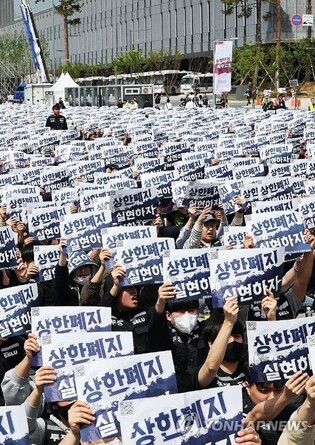
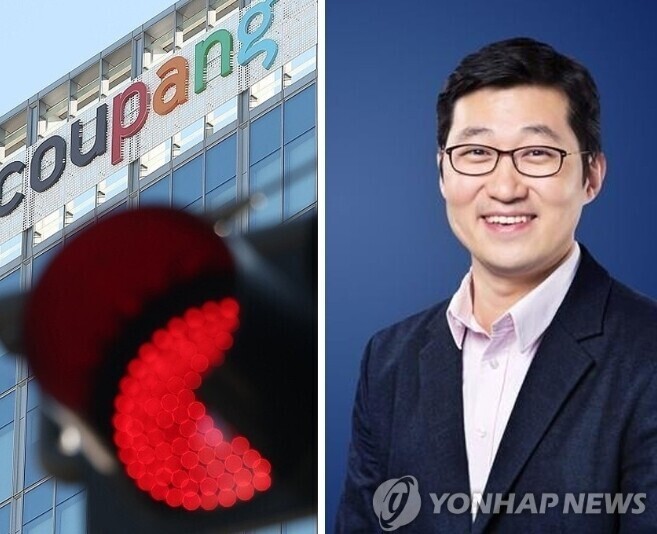
Photo courtesy of Yonhap News |
[Alpha Biz= Kim Jonghyo] Coupang is making every effort to prevent its chairman Kim Bom-suk from being designated as the group’s controlling shareholder (“same person”) under South Korean regulations. The company argues that there is no risk of self-dealing and that such designation does not align with global standards—claims that appear unconvincing at best.
Coupang has also complained of “double regulation” due to its U.S. listing, even suggesting that prominent global CEOs on its board could be subject to Korean oversight—an argument that stretches credibility.
These claims reveal a troubling stance: reaping enormous profits from the Korean market while attempting to evade corresponding responsibilities.
The assertion that Coupang’s ownership structure eliminates the risk of self-dealing misses the point. The core purpose of the controller designation system is to monitor abuses of market dominance and unfair practices.
Kim maintains effective control through super-voting shares, enabling him to exercise outsized influence with a relatively small equity stake. Operating behind the U.S.-listed Coupang Inc., he exerts significant control over Korea’s retail ecosystem.
To argue that he should be exempt from legal accountability and regulatory oversight is untenable.
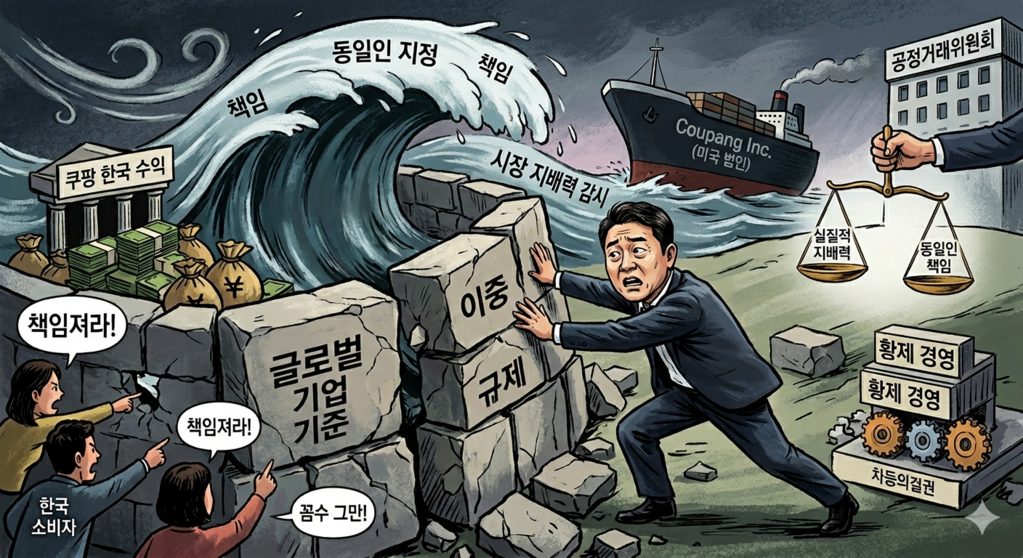 |
Photo = Generated by Google Gemini |
The claim that foreign board members could be implicated is equally unreasonable. Companies operating in Korea must abide by Korean laws. If Coupang has established itself as a dominant player in the domestic market, it should comply fully with local fair trade regulations.
Invoking “global standards” to undermine regulatory effectiveness risks misleading authorities. If Coupang is concerned about board members being subject to Korean rules, the appropriate response would be to restructure its governance in line with local norms.
The complaint about double regulation appears to be little more than opportunistic maneuvering. The company has grown by tapping Korean consumers, yet seeks to shield itself under U.S. legal frameworks when accountability is required—an example of regulatory arbitrage.
It remains to be seen how long the Fair Trade Commission will tolerate such arguments while applying lenient measures, such as designating only Coupang’s Korean entity as the controller.
A “global company” label must not become a shield that undermines Korea’s market order. Kim is the de facto controlling figure of Coupang. With real control and economic influence comes responsibility—a fundamental principle of capitalism.
Authorities should no longer be swayed by claims of reverse discrimination and instead designate Kim as the controlling shareholder, ensuring transparent and rigorous oversight.
Alphabiz 김종효 선임기자(kei1000@alphabiz.co.kr)