

 |
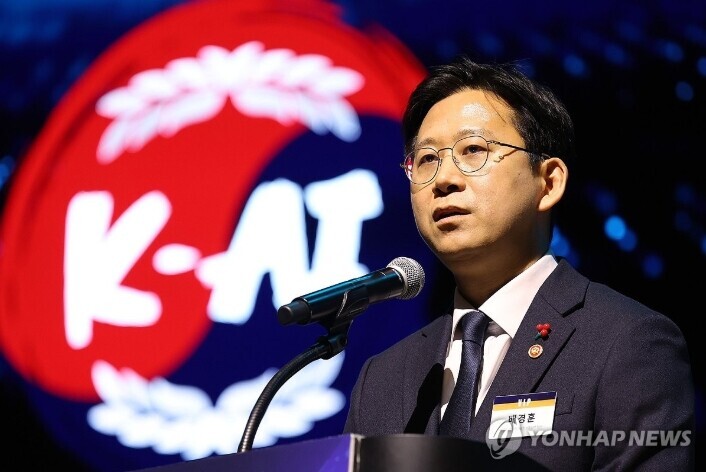
South Korea’s Deputy Prime Minister and Minister of Science and ICT, Bae Kyung-hoon. (Photo: Yonhap News) |
[Alpha Biz= Kim Sang Jin] The Lee Jae-myung administration’s ambitious “National Champion AI” selection program, aimed at elevating South Korea’s artificial intelligence competitiveness to a global level, is increasingly being criticized as a textbook case of hasty and poorly executed administration. The project is now widely seen as the product of mismanagement involving Deputy Prime Minister and Minister of Science and ICT Bae Kyung-hoon, Presidential Office Senior Secretary for AI Future Planning Ha Jung-woo, and Vice Minister Ryu Je-myung, who oversaw day-to-day operations.
After controversially eliminating a leading contender based on vague evaluation criteria, authorities have further undermined administrative credibility by hastily introducing a so-called “repechage” or second-chance process that was never stipulated in the original guidelines.
 |
Photo courtesy of Yonhap News |
Elastic Criteria and Administrative Incompetence
At the center of the controversy is the Ministry of Science and ICT’s loosely defined standard for what it calls a “fully independent foundation model,” often referred to as “dok-pa-mo.” The ministry’s working-level officials, led by Vice Minister Ryu Je-myung, emphasized the importance of developing AI models “from scratch” without reliance on external technologies.
The outcome, however, has drawn sharp criticism. Naver Cloud, widely regarded as Korea’s most advanced AI company and a credible challenger to global big tech firms, was eliminated on the grounds of “insufficient independence” due to its use of open-source weights—an explanation many in the industry find unconvincing.
Industry insiders argue that the criteria used to assess “independence” were never clearly defined, raising serious questions about the objectivity of the evaluation. Senior Secretary Ha Jung-woo, himself a former industry expert, has also faced criticism for failing to ensure that technical realities were properly reflected in policy decisions.
Favoritism Allegations and Growing Distrust
The controversy has been further fueled by allegations of favoritism tied to Deputy Prime Minister Bae Kyung-hoon’s professional background. LG, Bae’s former employer, had been widely viewed as a strong frontrunner from the outset, and Naver’s unexpected elimination has sparked speculation that the outcome may have been predetermined.
Market observers and industry participants have voiced concerns that the process amounted to “reverse discrimination” against a company that has long played a leading role in building Korea’s domestic AI ecosystem. Critics argue that the mere fact a national strategic project has become entangled with suspicions related to officials’ personal affiliations already constitutes an administrative failure.
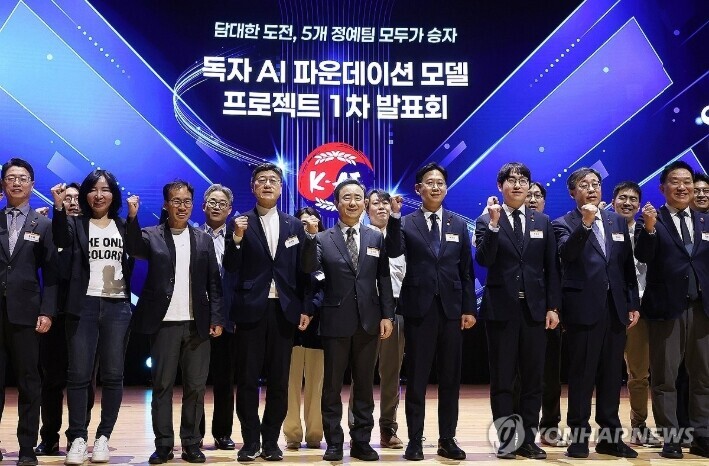 |
Photo courtesy of Yonhap News |
A Hastily Invented ‘Second Chance’ and Erosion of Trust
The situation worsened when the ministry, reportedly concerned that the project would lose momentum without Naver’s participation, abruptly floated the idea of a “second-chance” mechanism for eliminated candidates. This procedure had not been mentioned at all in the original project announcement.
While Deputy Prime Minister Bae continues to promote the vision of South Korea joining the ranks of the world’s top three AI powers, critics say the government has instead set a dangerous precedent by bending its own rules to salvage a faltering project.
If Senior Secretary Ha and Vice Minister Ryu either condoned or orchestrated this move, detractors argue it has effectively reduced Korea’s AI policy framework to the level of an amateur competition.
“Bureaucratic Missteps and Collusion Allegations Are Holding Back AI Ambitions”
Artificial intelligence is a core strategic industry for both the nation and the Lee administration. What policymakers need, critics say, are clear standards and fair procedures—not headline-driven initiatives or suspicions of favoritism.
If the current pattern of improvised rules and mounting allegations continues, the “National Champion AI” project risks becoming a source of ridicule rather than a pillar of global competitiveness. Observers urge the government to conduct a thorough review of the flawed evaluation process and restore the basic principles of transparency and administrative integrity before further damage is done.
Alphabiz Reporter Kim SangJin(letyou@alphabiz.co.kr)