

 |
Photo courtesy of Yonhap News |
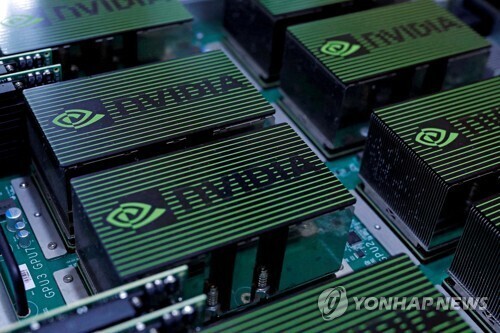
[Alpha Biz= Kim Jisun] China is expected to significantly boost its self-sufficiency in graphics processing units (GPUs)—a core component for artificial intelligence (AI)—as tightening U.S. export controls accelerate the country’s push for semiconductor independence.
According to Chinese-language media reports on March 25, citing a recent report by Morgan Stanley, China’s AI GPU self-sufficiency rate could rise from 33% in 2024 to 76% by 2030—more than doubling within six years.
The projection reflects China’s intensified efforts to localize key technologies in response to U.S. export restrictions. In addition to major technology companies such as Huawei and Alibaba, emerging players including Cambricon and Moore Threads are actively developing GPUs, expanding the domestic ecosystem.
The market is also poised for rapid growth. The report forecasts that China’s AI chip market will expand from $6 billion in 2024 to $51 billion by 2030, representing a compound annual growth rate (CAGR) of 42%.
Rising investment in cloud infrastructure is expected to further drive GPU demand. By 2030, China’s cloud computing capital expenditure is projected to reach $130 billion, with more than half allocated to AI GPU-related equipment.
Manufacturing capabilities are improving as well. Monthly production capacity for processes at 12nm and below is expected to increase from approximately 8,000 wafers in 2024 to 42,000 in 2028 and 50,000 by 2030. Yield rates are also projected to reach around 50% by 2030, enabling China to meet a substantial portion of domestic demand.
China is pursuing a strategy of expanding production capacity and capital investment to narrow the technology gap, gradually reducing reliance on overseas suppliers. Chinese companies are increasingly adopting products from domestic foundry SMIC instead of global leader TSMC.
알파경제 Kim Jisun Reporter(stockmk2020@alphabiz.co.kr)